Character Line Up
The Foundation of the Silhouette
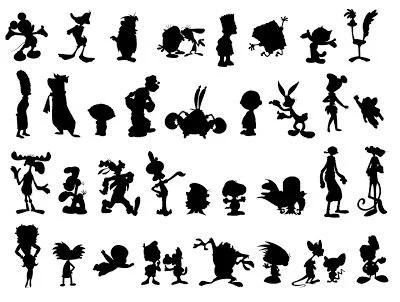
How many of these characters can you recognize?
Designing a professional character cast begins with a commitment to clarity over complexity. The foundation of this entire process is the silhouette. If you strip a character down to a solid black shape and they are no longer recognizable, the design has failed to establish a clear identity. A strong silhouette is the ultimate test of a character's readability. Iconic designs in animation history are famous because they can be identified by their Silhouettes alone. This level of clarity is achieved by avoiding visual clutter and focusing on big, identifiable shapes that define the character's physical presence from a distance.
Psychology of Shape Language
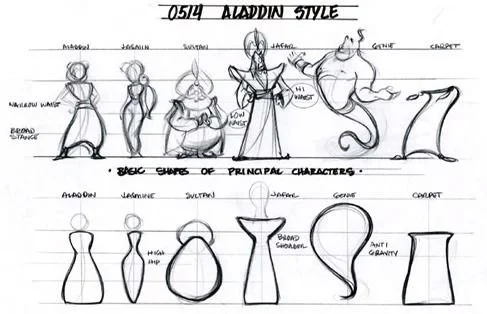
Bill Perkin’s had this pinned up on the wall during the producion of Aladdin.
Shape language serves as the psychological DNA within that silhouette. Every primary shape carries a subconscious meaning that tells the audience how to feel about a character before they ever speak. A square suggests stability, reliability, and stubbornness. It is the shape of a character who acts as a literal wall or a protector. A circle feels friendly, soft, and approachable, making it the standard choice for protagonists we are meant to trust. A triangle, with its sharp corners and tapering lines, implies speed, danger, and intensity. By committing to a specific shape motif, you create a visual shorthand that communicates personality with immediate impact.
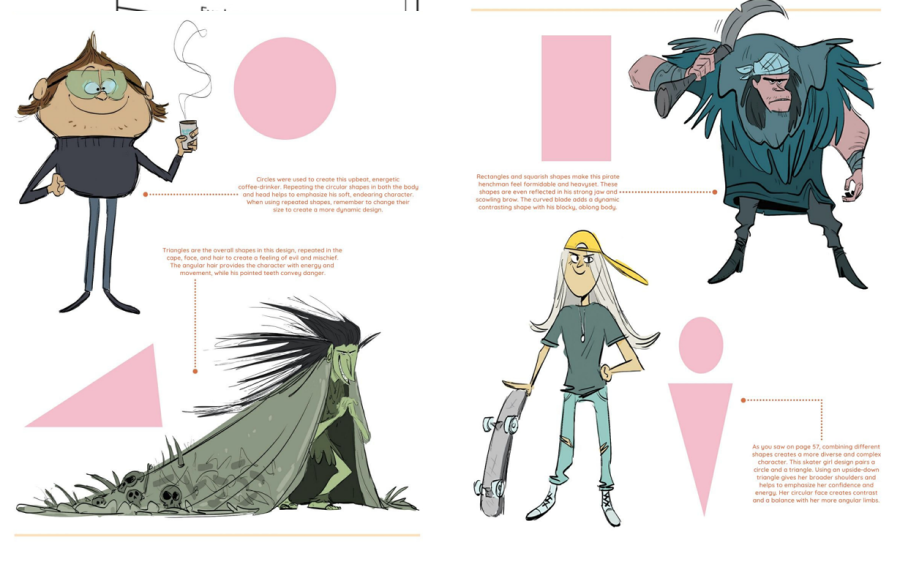
3dtotal Publishing, editor. Fundamentals of Character Design: How to Create Engaging Characters for Illustration, Animation & Game Design. 3dtotal Publishing, 2020. Section by Stephanie Garcia Rizo https://amzn.to/4jZLqGj
Internal BMS and Utility
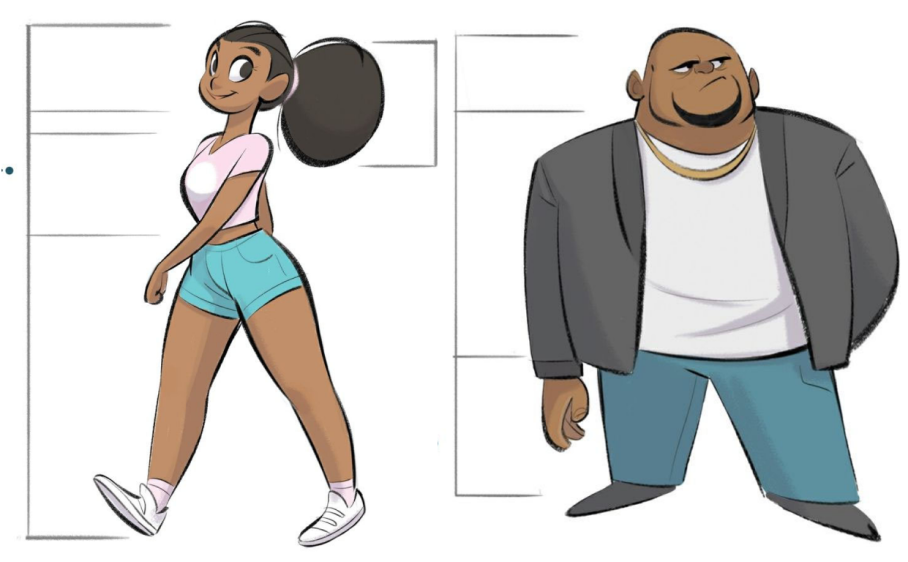
3dtotal Publishing, editor. Fundamentals of Character Design: How to Create Engaging Characters for Illustration, Animation & Game Design. 3dtotal Publishing, 2020. Section by Kenneth Anderson https://amzn.to/4jZLqGj
To make these shapes functional, you must apply the core tools of visual hierarchy. These principles act as a map for the eye, ensuring the most important narrative information is processed first. Size and scale are the most immediate of these tools, utilized through the big, medium, and small principle. By making one specific element of a character much larger than the rest, you create an internal anchor. This is particularly effective when applied to the three section method. Making the head the big section highlights intelligence, while making the legs the big section highlights speed. This internal hierarchy tells the viewer exactly what the character's specialty is.
Contrast and Visual Bullseyes
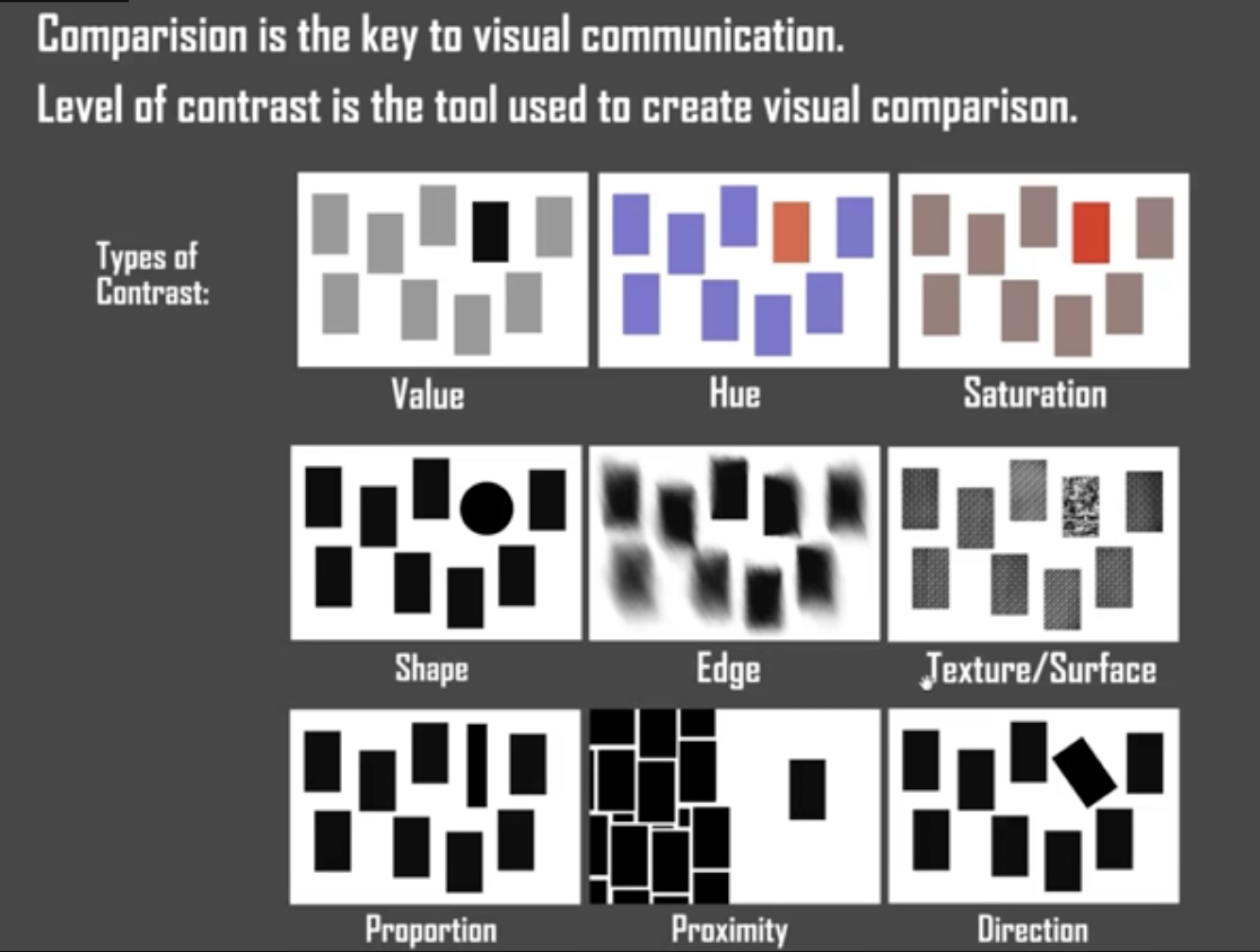
Nielson, S. (n.d.). Fundamentals of lighting [Online course]. Schoolism. https://schoolism.com/courses/concept-art/fundamentals-of-lighting-sam-nielson
Contrast and value further refine this hierarchy by creating a bullseye for the viewer. Hierarchy is established by how much an object stands out from its environment. Placing high contrast areas at the primary point of interest, such as the face or a unique weapon, ensures the eye knows exactly where to land. If every part of the design has the same level of detail and contrast, the viewer experiences visual fatigue. By simplifying the values in secondary areas, you focus the viewer’s attention where it matters most. There are a lot of options available for our tool belt. However, a great place to start is the top 3. Hue, Value, and Saturation.
The Rollercoaster Lineup
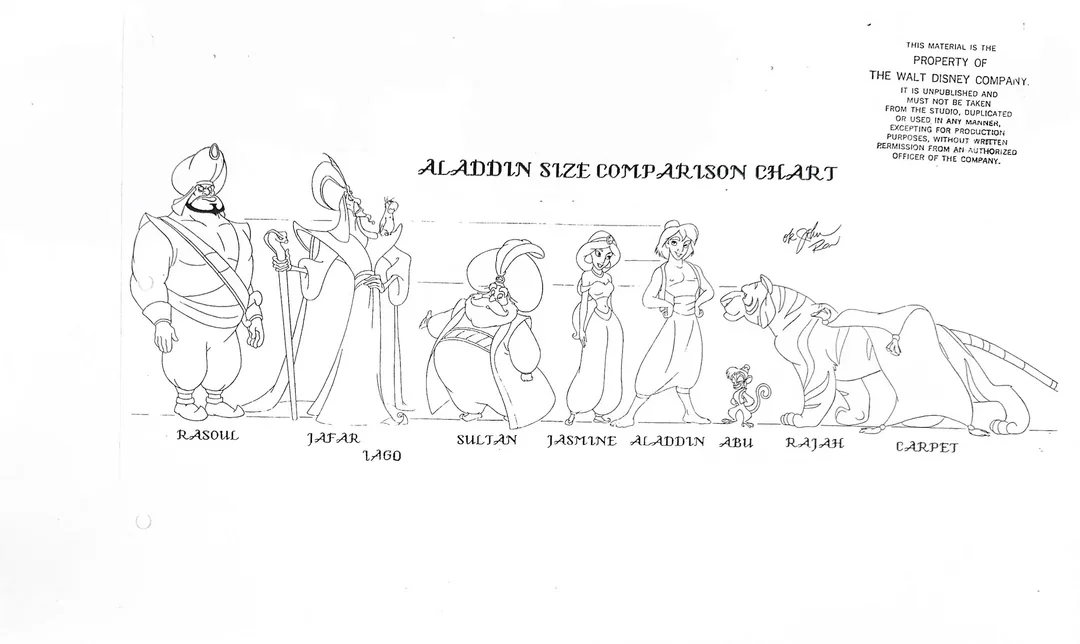
Aladdin Character Lineup.
In a lineup, these tools help create the rollercoaster effect. You want to avoid the boring train track where every character is the same height and width, creating a flat, uninteresting horizontal line. Instead, a successful lineup uses the rollercoaster analogy, where the viewer's eye bounces up and down, traveling from a tall, thin character to a short, wide one. This variety in height and mass prevents the cast from feeling stagnant.
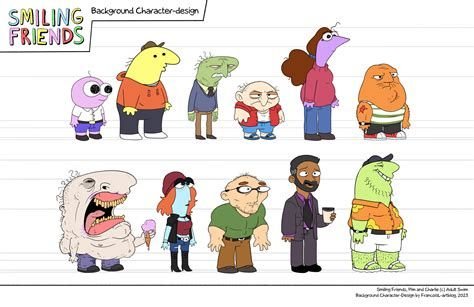
Smiling Friends Background Characters.
Finalizing Uniqueness
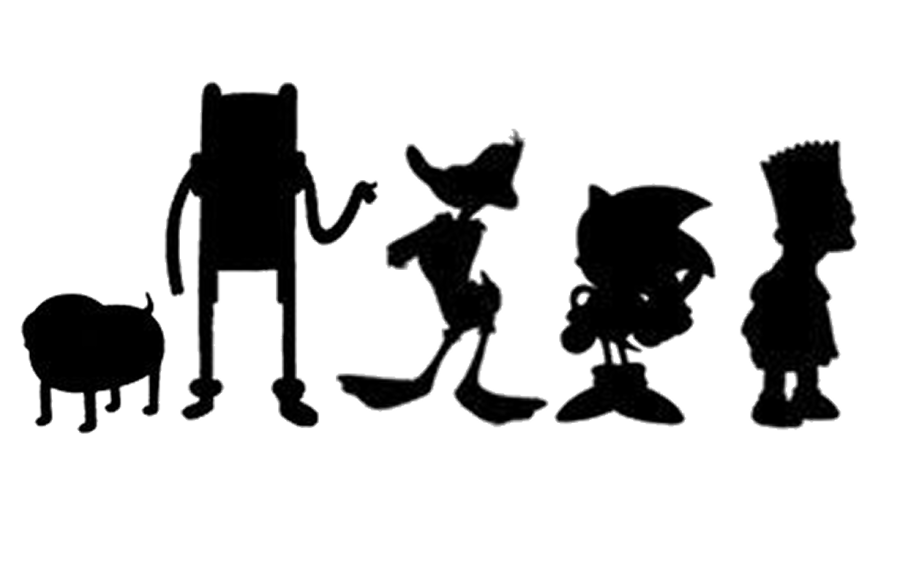
Highly recognizable characters
To finalize the uniqueness of each member, you add a signature quirk or a weird shape. This is one specific hook, like a massive hat, a strange hairstyle, or an unusual prop, that belongs only to them. This ensures they stand out in a crowd and gives them a recognizable "brand." This combination of internal structure and group variety ensures a cast that is both memorable and easy to read.