Creating Depth Without Linear Perspective
Ernest Norling, Perspective Made Easy, Dover Publications (1999).https://amzn.to/45nxnV7
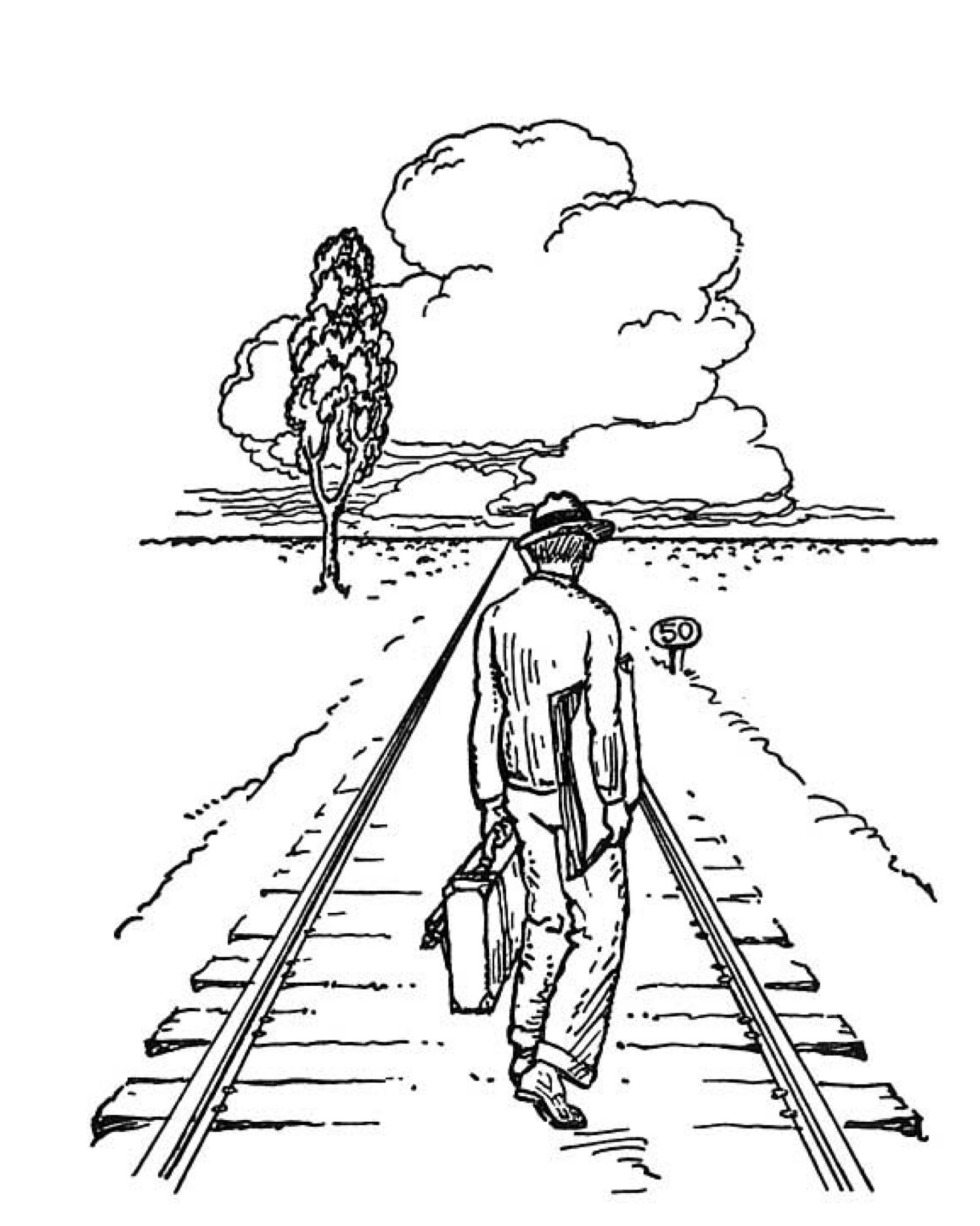
Whenever we talk about depth in art, the conversation usually shifts toward railroad tracks and vanishing points. Linear perspective is an awesome, but it can feel rigid and overly technical, sometimes it can be hard to draw what you want with the perspective assist turned on in procreate!
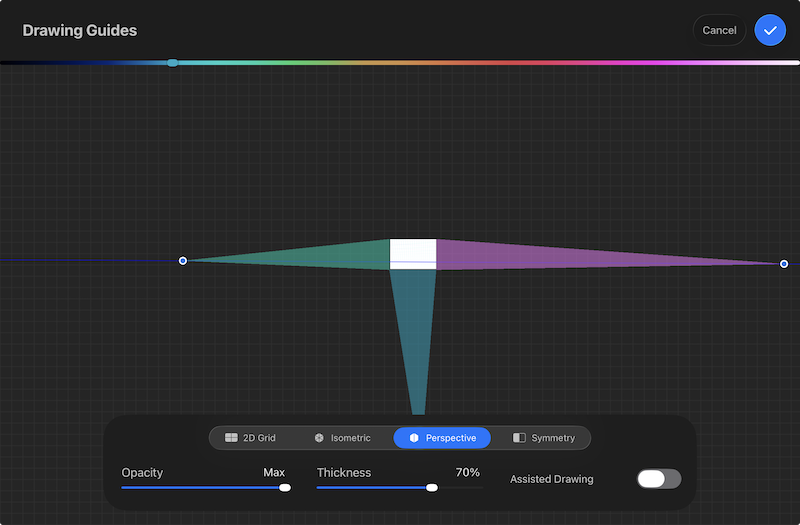
For most of art history, people weren't using rulers or grids. They relied on a set of observational techniques to make a flat page feel like a three-dimensional world. Here are so methods you can look for when creating your composition.
Overlapping
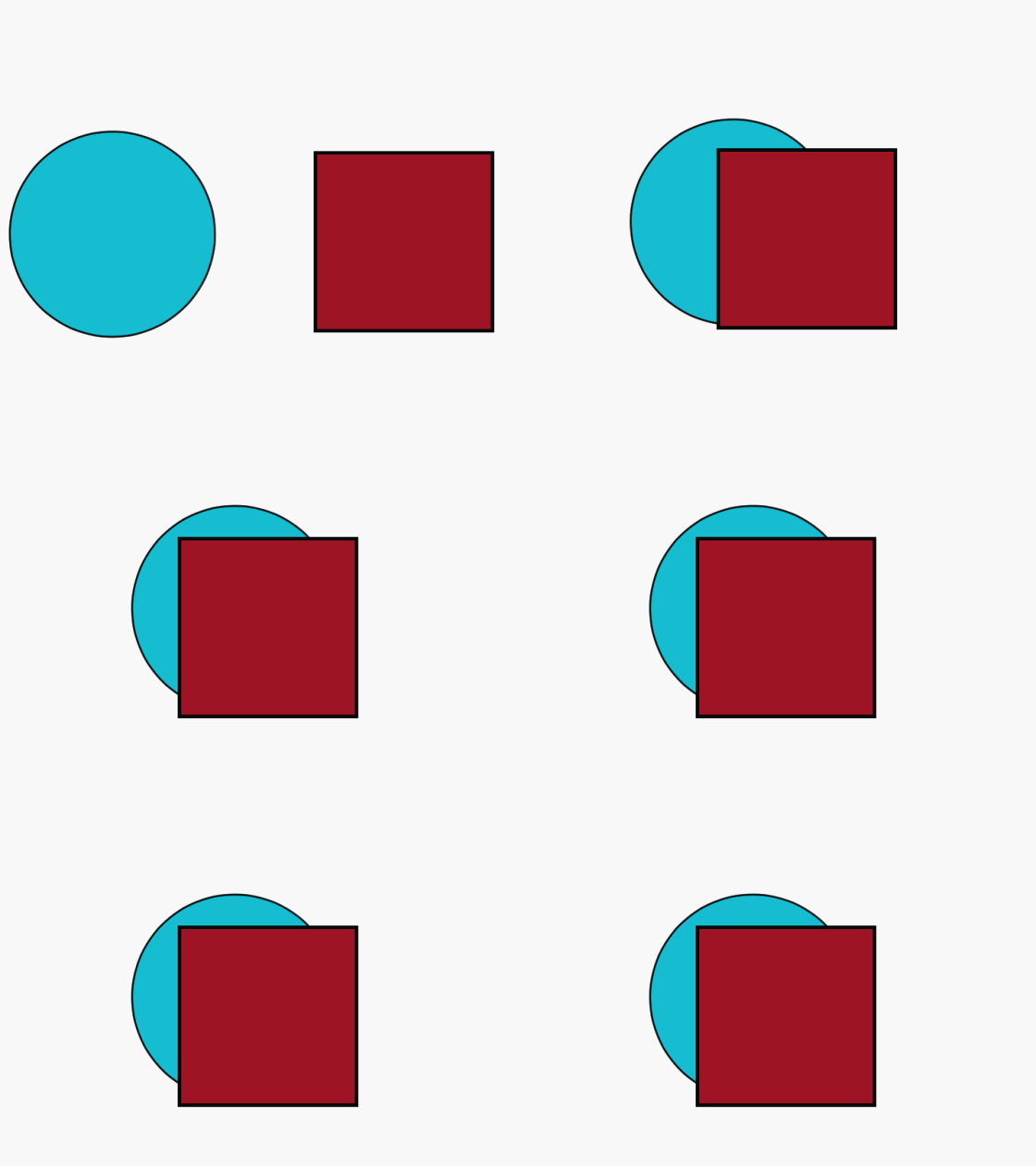
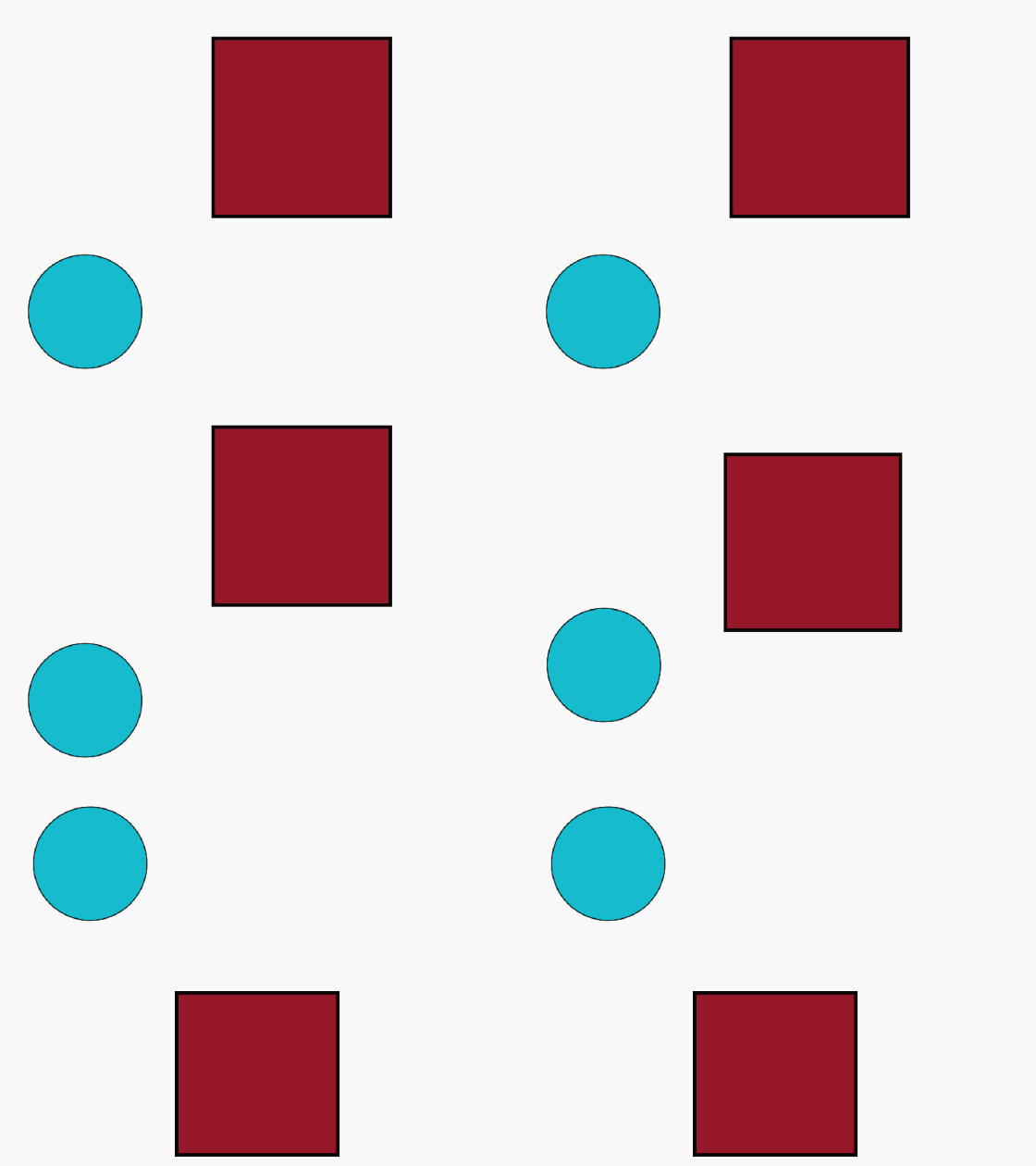
Overlapping to show the square in front.
This is the most fundamental way we perceive space. If one shape covers part of another, the one on top is closer. Think about this in layers. These 2 examples, the shapes are the same size. The difference is just overlapping. If you’re drawing a mountain range, you just tuck one peak behind the other to create an instant "front and back." This works for anything from a landscape to a few objects sitting on a desk.
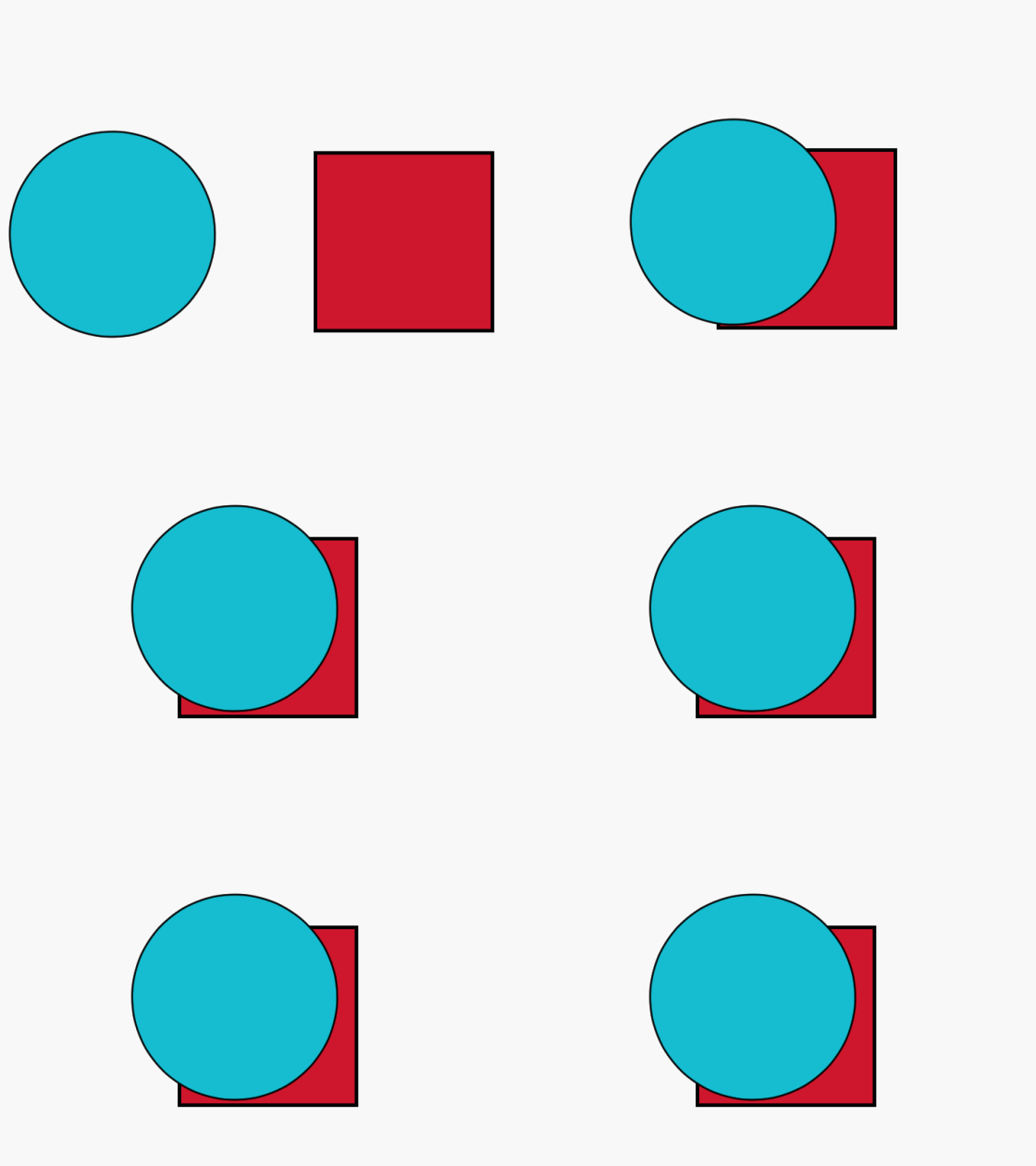
Now the circle is front with just overlapping.
Atmospheric Perspective and Value Contrast
Distant objects look different because of the air between you and the subject. To pull this off, remember that distance reduces contrast.
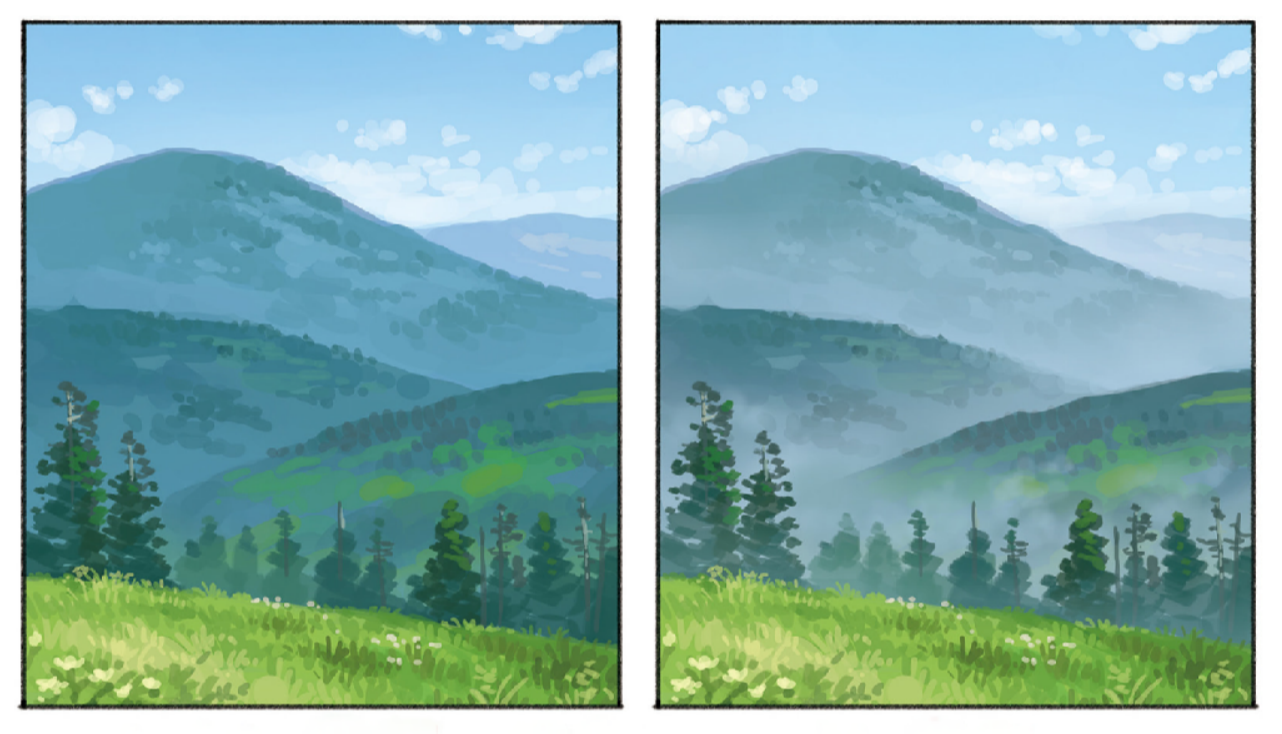
Seiji Yoshida, Tips to Make You Want to Draw, Pie International (2021)
In the foreground, use your darkest color and brightest color. As things move into the distance, you want to compress those values. Shadows should get lighter and highlights should get darker until everything settles into a mid-tone grey. At the same time, shift your shadow colors toward the atmosphere’s color, like the sky,and let your details blur. Rayleigh scattering is the scientific reason behind atmospheric perspective. It’s the effect of light hitting molecules in the air, which scatters shorter blue wavelengths more than others.
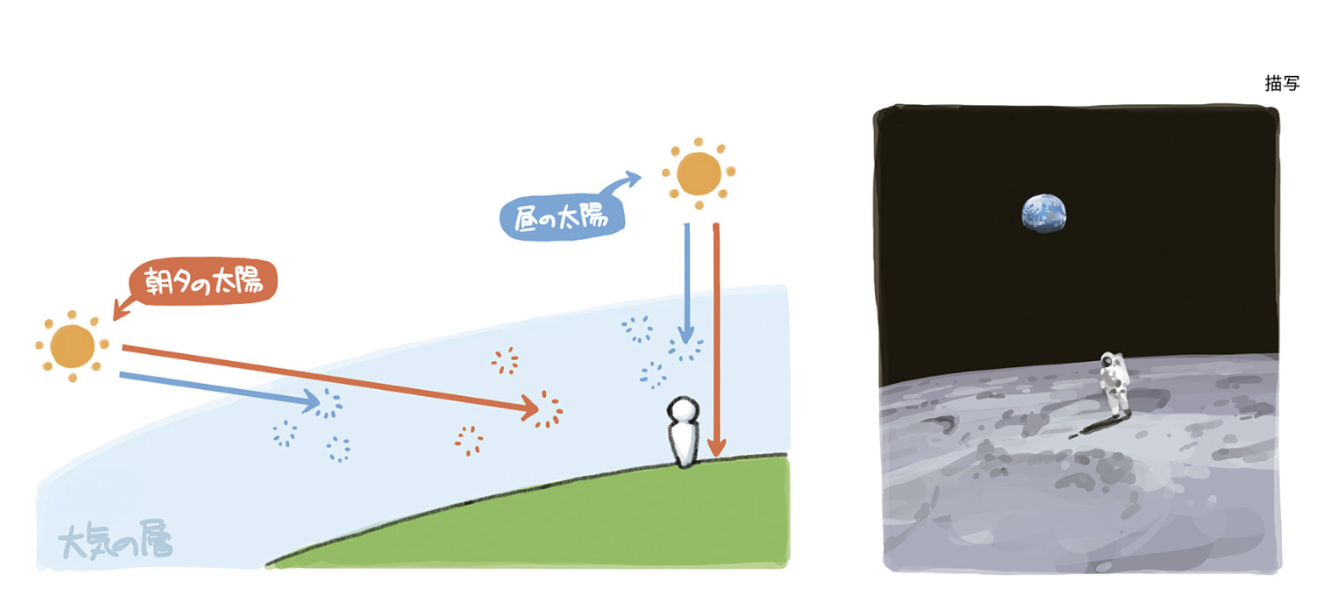
Seiji Yoshida, Tips to Make You Want to Draw, Pie International (2021) This demonstrates the difference between atmosphere on earth vs no atmosphere in space.
Vertical Placement
The higher something is on the page, the further away it generally looks. Think about standing in a field: the grass at your feet is at the bottom of your vision, while the trees on the horizon are much higher up. Generally speaking, we are prone to feeling like the eye level line is higher on the picture plane, since are eyes are places higher on our bodies. However, The most precise interpretation is that of the digram below.
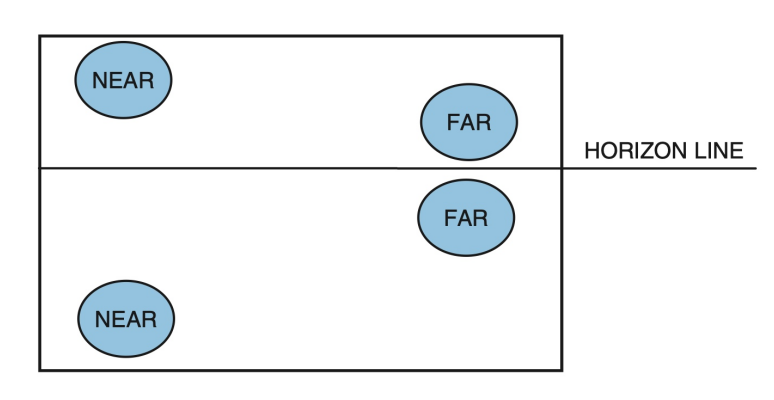
Bruce Block, The Visual Story, Routledge (2020).https://amzn.to/49vgryp
Relative Scale
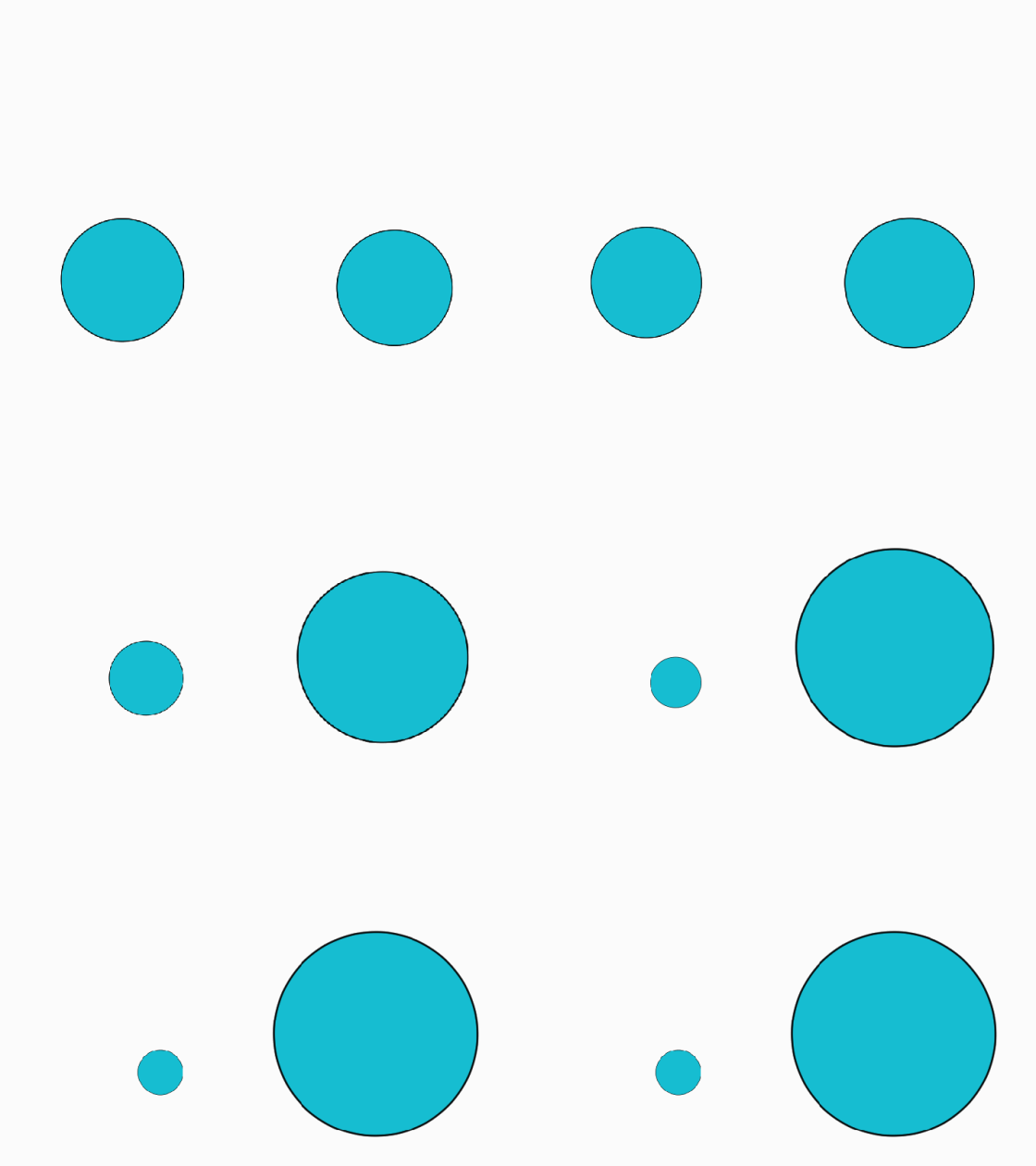
If you draw two similar objects and make one significantly smaller than the other, the brain assumes the smaller one is further away. You don't need a grid for this; you just have to be intentional with your sizing. It’s an effective way to establish a sense of scale or drama very quickly.
Edge Quality
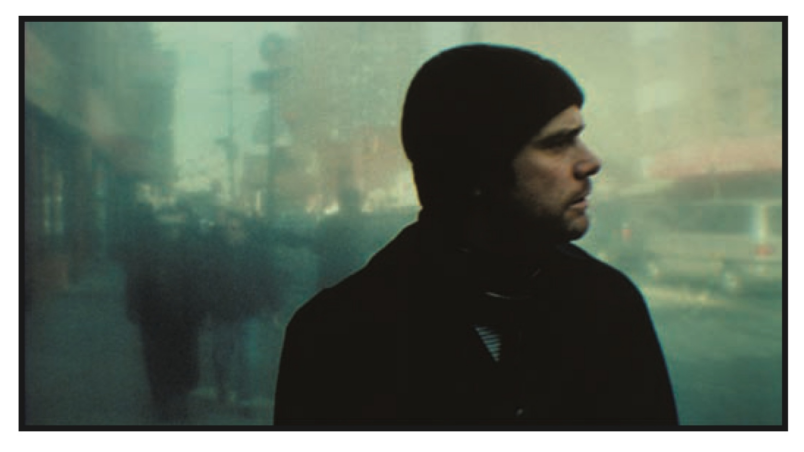
Eternal Sunshine of the Spotless Mind, directed by Michel Gondry (2004). https://amzn.to/464W2hl
Our eyes can’t focus on everything at once. If you’re looking at a primary subject, the background naturally blurs. I save my sharpest, most defined lines for the focal point or the foreground. For everything else, I let the edges get soft or "lost." This creates a natural focus that feels more lifelike than using the same heavy line weight everywhere.
Parallel Projection
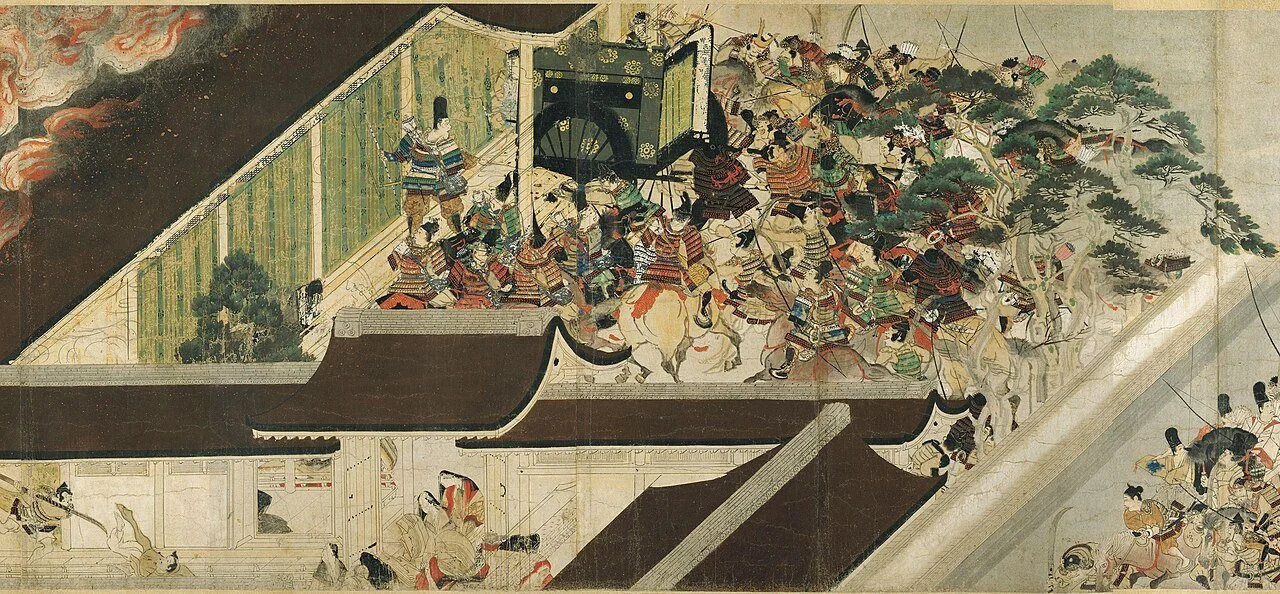
Heiji Monogatari Emaki (Night Attack on the Sanjō Palace), Kamakura period (13th century).
This approach is common in video games and traditional East Asian art. It completely ignores the rule that things get smaller as they recede. Instead, parallel lines stay parallel. Whether it's an isometric view or an oblique sketch, it’s a very clean way to show a room or a building without the "pinched" look of linear perspective.
Combine for Best results
The best results usually come from mixing these techniques. You might have a firm edged object in the foreground overlapping a mountain that is faded into a soft, low-contrast atmospheric blue in the background. It’s often more effective to use these observational tricks to get your composition ready. Sometime, our linear perspective could be correct but feels off still and we can use these techniques to help edit our compositions!